System architecture
This page describes the architecture of the RS-Python system as a whole. The architecture of each component is described in its own repository, e.g. rs-server or rs-dpr-service.
Main components
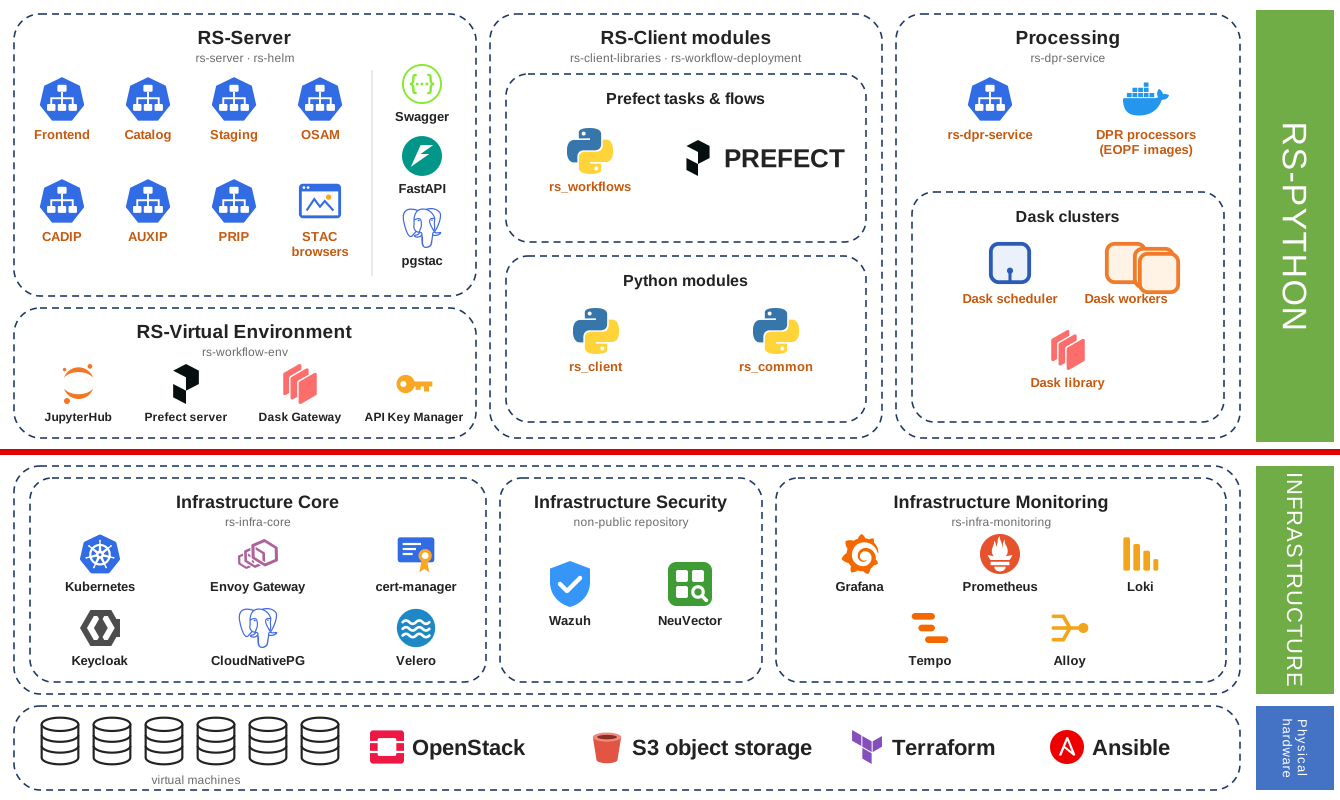
| Layer | Components | Repositories |
|---|---|---|
| RS-Python | Web services (frontend, catalog, external data sources, staging, OSAM), STAC browsers | rs-server, rs-helm, rs-server-deployment |
| Python libraries and Prefect flows | rs-client-libraries, rs-workflow-deployment | |
| DPR service and processors | rs-dpr-service, rs-workflow-env (Docker images of the processors) | |
| Virtual environment: JupyterHub, Prefect, Dask Gateway, API Key Manager | rs-workflow-env | |
| Infrastructure | Core: Kubernetes, Envoy Gateway, cert-manager, Keycloak, CloudNativePG, Velero... | rs-infra-core |
| Monitoring: Grafana, Prometheus, Loki, Tempo, Alloy | rs-infra-monitoring | |
| Security: Wazuh, NeuVector | non-public repository | |
| Physical infrastructure | Cloud provider (OpenStack virtual machines, S3 object storage), provisioned with Terraform and Ansible | rs-infra-core |
The detailed list of the third-party components and their licenses is given in the Third-party components annexes.
Collaboration between the components
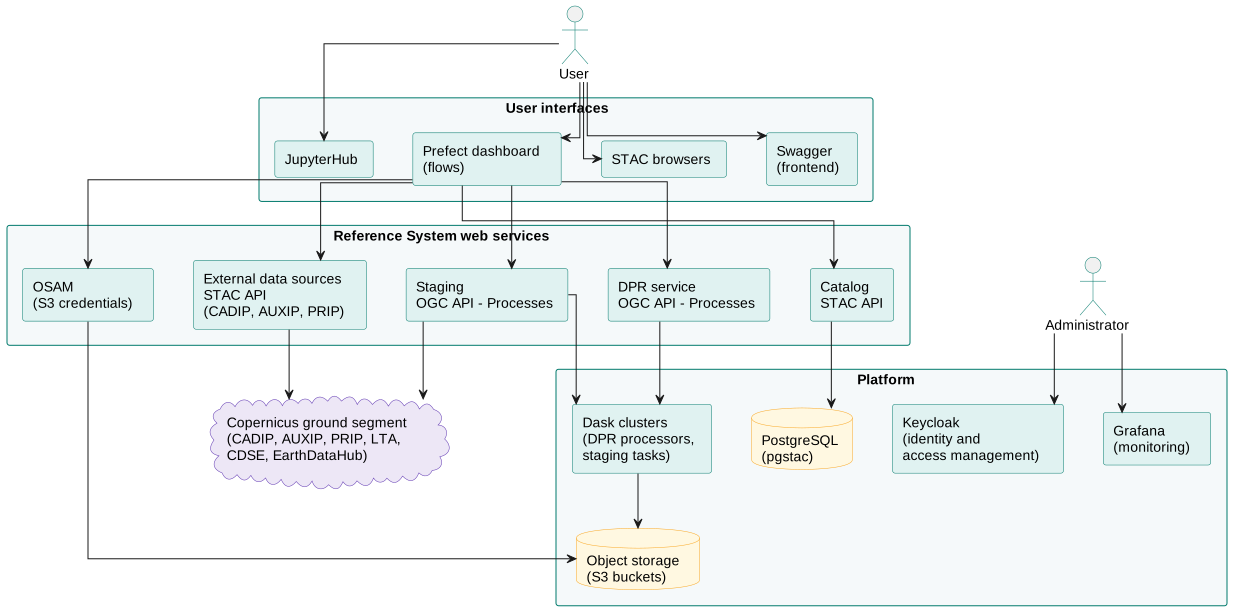
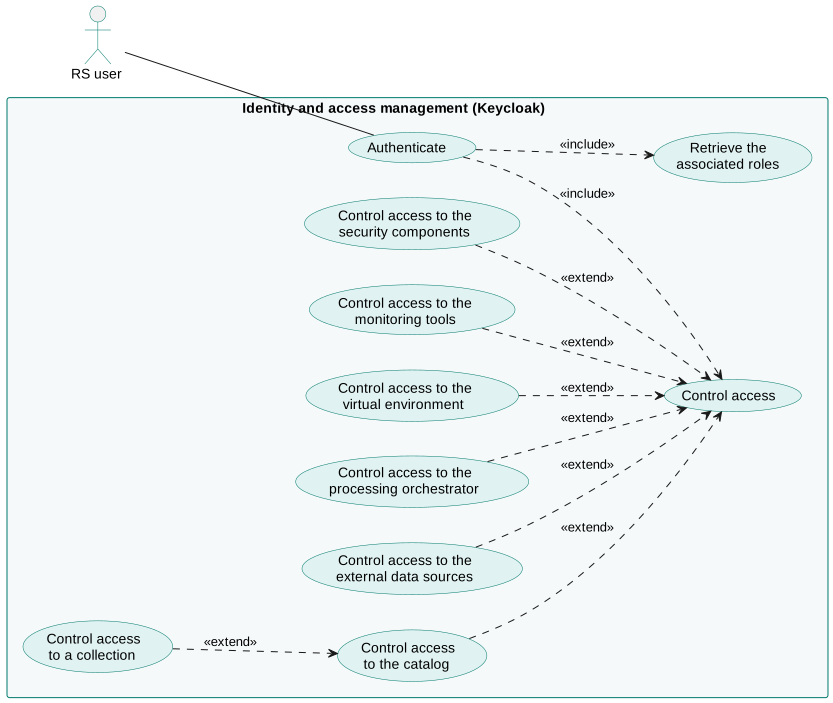
- The users interact with the system through JupyterHub, the Prefect dashboard, the STAC browsers and the Swagger page. They are all authenticated by Keycloak.
- The Prefect flows implement the processing chains. They call the web services with the rs-client-libraries, authenticated with the API key of the user.
- All the web services are exposed by Envoy Gateway behind a single domain name, and check the rights of the user for each request.
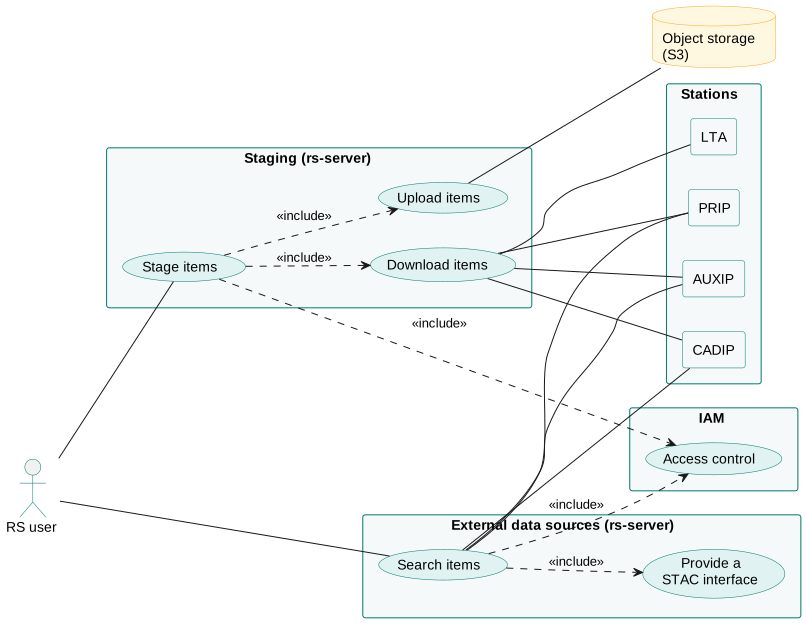
- The external data sources services translate the STAC requests into OData requests to the Copernicus stations.
- The staging and the processing services run their tasks on Dask clusters, and write the products in the object storage. See Running a processor on Dask for the details and a review of this design.
- The catalog stores the metadata of the products in a PostgreSQL database (pgstac).
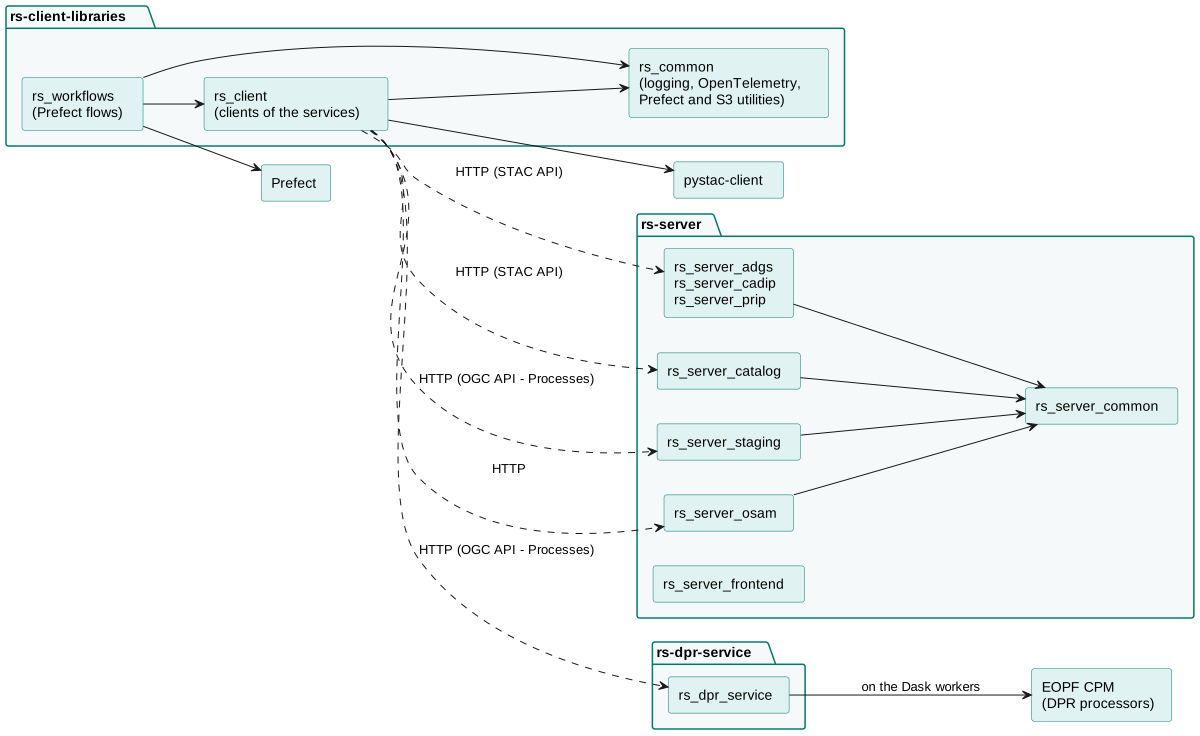
The Python modules depend on each other as follows:
Each kind of data follows a lifecycle, from its staging or generation to its deletion, described in Catalog data model and lifecycle.
Deployment
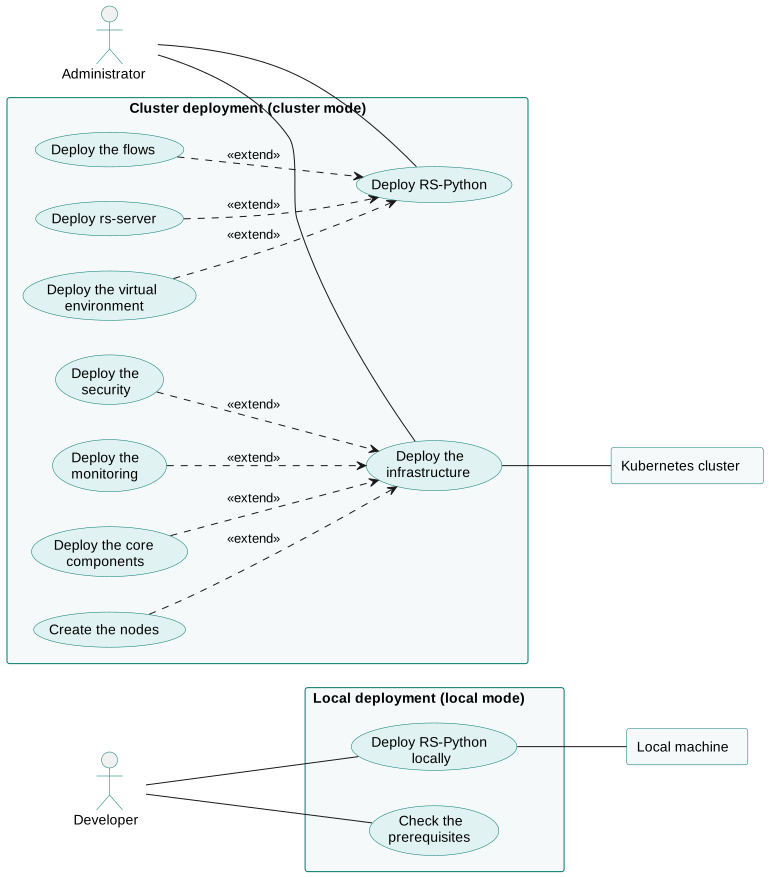
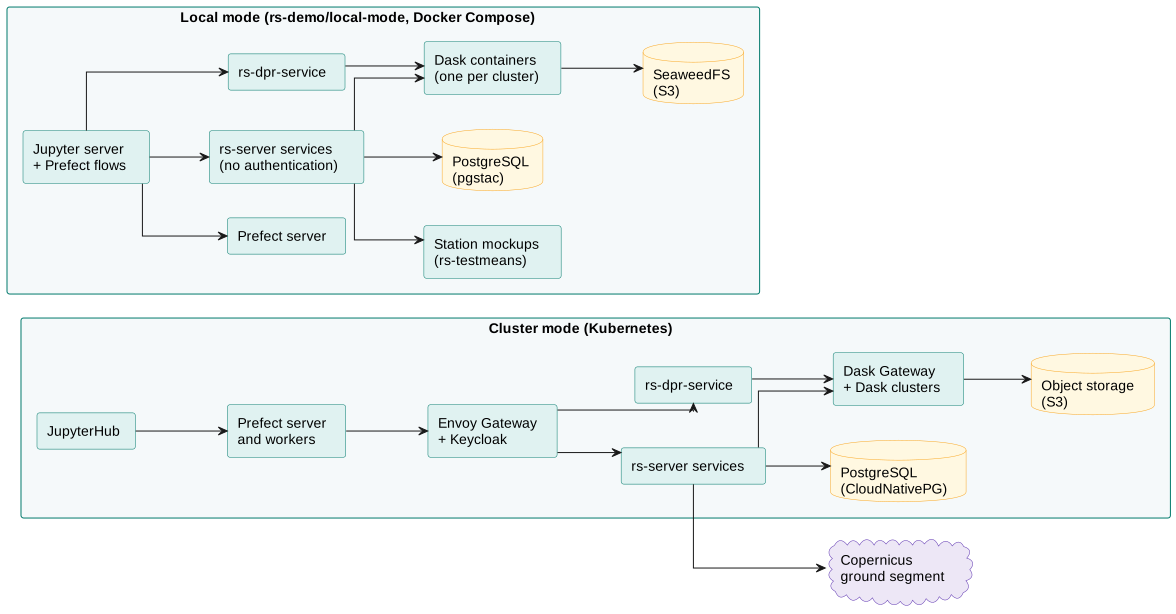
The deployment on a Kubernetes cluster, in several layers and node pools, is described in Deploy RS-Python. The local mode, used for the development, is described in Local mode.
Actors
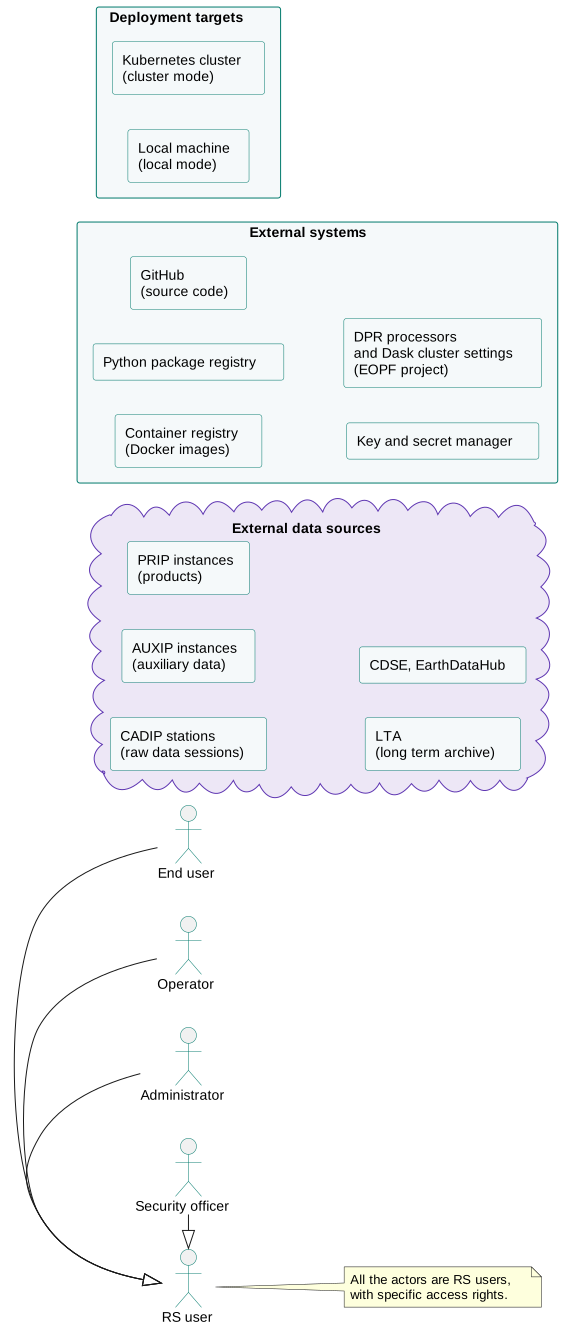
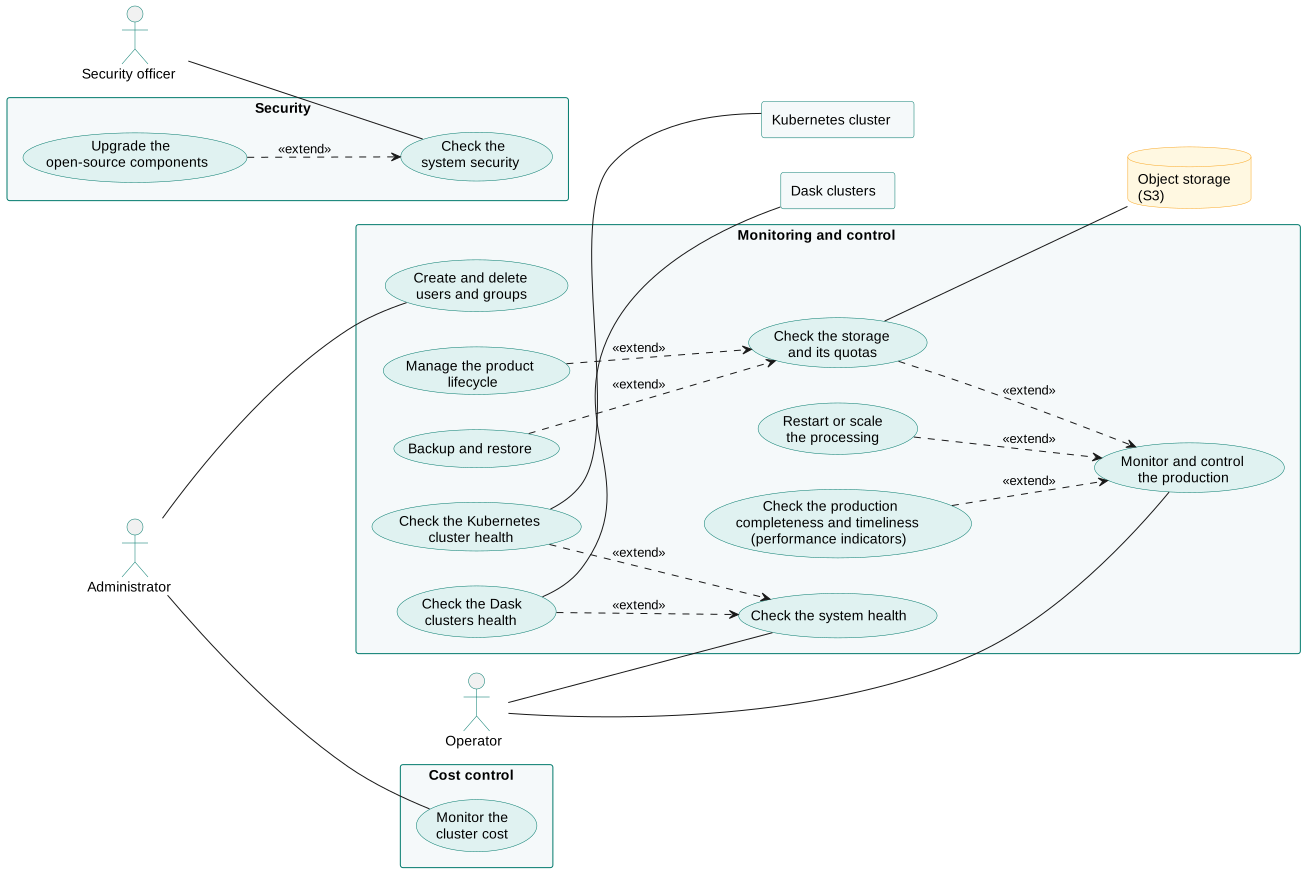
All the actors are RS users, with specific access rights: end users, operators, administrators and security officers. The external data sources provide the raw data and auxiliary data needed by the processing chains. The DPR processors and the settings of the Dask clusters that run them are delivered by the EOPF project. Two targets are supported to deploy RS-Python: a local machine and a Kubernetes cluster.
Use cases
Access control
External data sources and staging
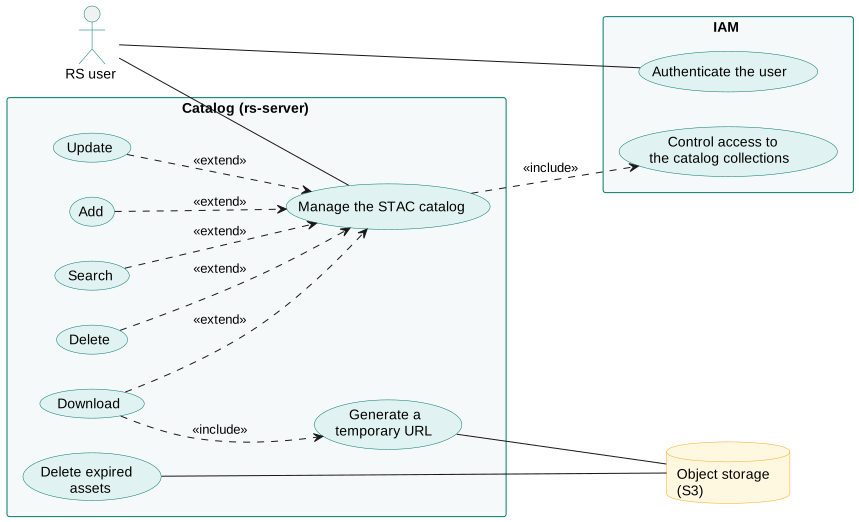
Catalog
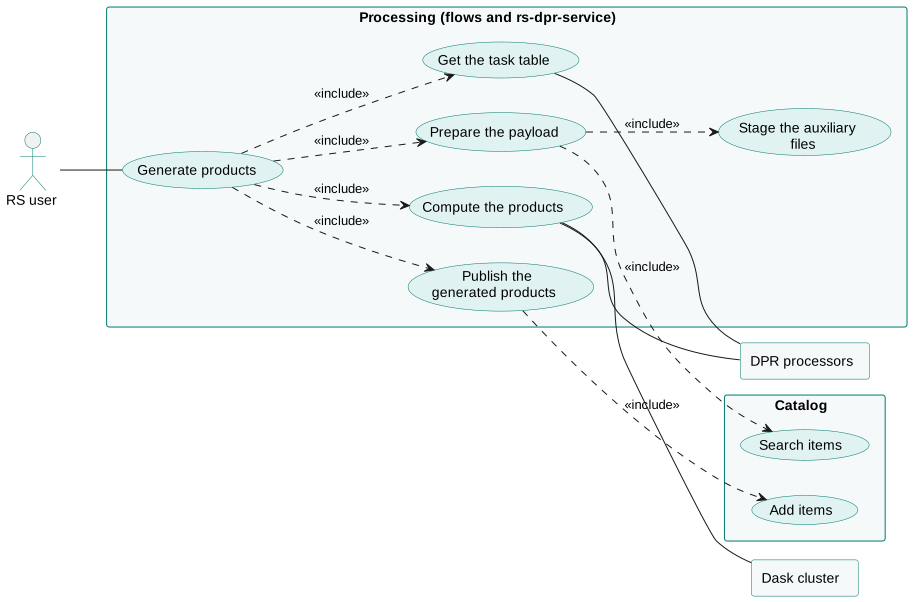
Processing
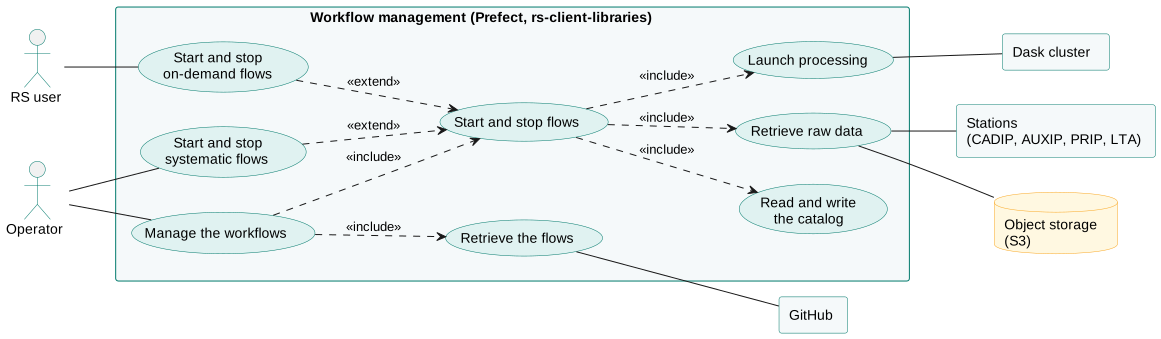
Workflow management
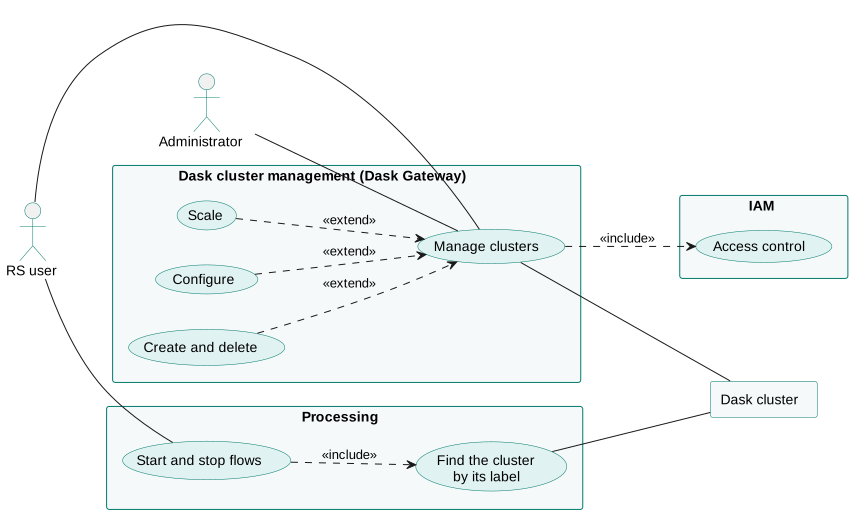
Dask clusters
Infrastructure
Deployment